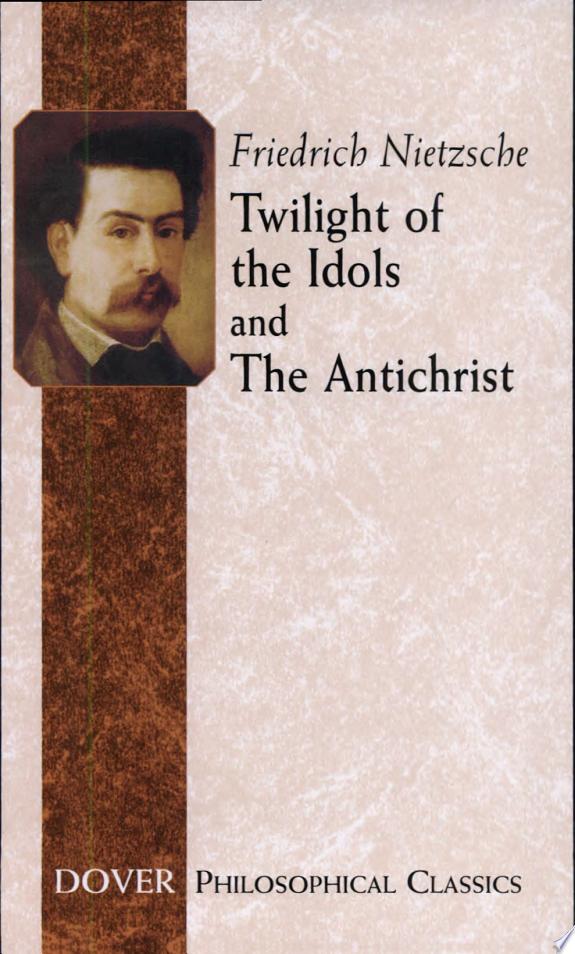
Twilight of the Idols and The Antichrist
Embed this book card on your site
Publisher description
"Books for everybody are always malodorous books: the smell of petty people clings to them," scoffed Friedrich Nietzsche. These two works, Twilight of the Idols and The Antichrist , crowned the radical philosopher's career of writing books that are decidedly not for everyone. Written in 1888, while Nietzsche was at the height of his brilliance — but shortly before the onset of the insanity that gripped him until his death in 1900 — they blaze with provocative, inflammatory rhetoric. Nietzsche's "grand declaration of war," Twilight of the Idols examines what we worship and why. Intended by the author as a general introduction to his philosophy, it assails "idols" of Western philosophy and culture (Socratic rationality and Christian morality among them) and sets the scene for The Antichrist . In addition to its full-scale attack on Christianity and Jesus Christ, The Antichrist denounces organized religion as a whole. H. L. Mencken declared that "it is, to many sensitive men, in the worst possible taste, but at bottom it is enormously apt and effective — on the surface, it is undoubtedly a good show." Students of philosophy, history, and German literature will find these works essential to an understanding of Nietzschean philosophy.
Description provided by Google Books