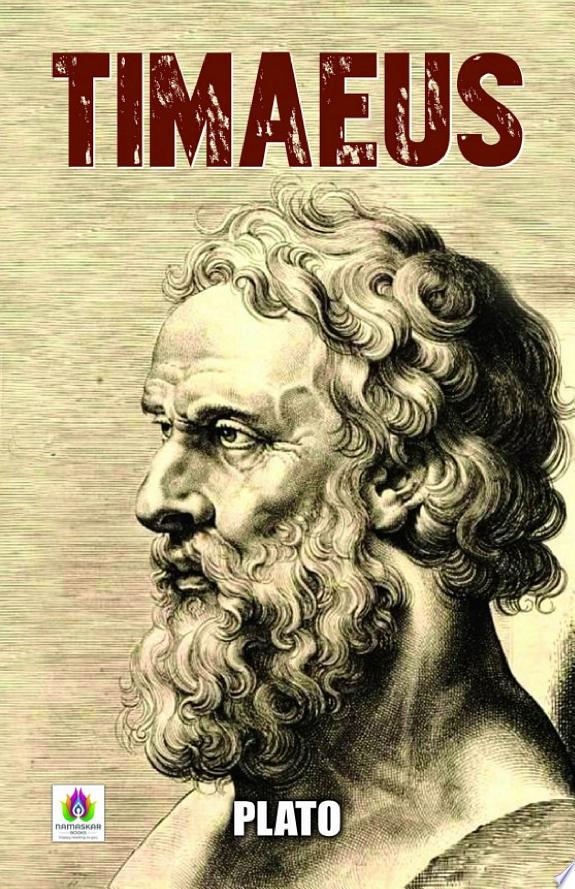
Timaeus
Embed this book card on your site
Publisher description
Timaeus by Plato is an extraordinary philosophical dialogue that delves deep into the very foundations of existence, nature, and the cosmos. In this captivating work, Plato presents a complex narrative that intertwines cosmology, ethics, and metaphysics, inviting readers to explore his visionary theories about the universe and the ultimate reality that governs it. Central to this dialogue is Timaeus, a Pythagorean philosopher, who explores the cosmos, presenting a compelling account of the creation and the structure of the world we inhabit. In the opening passages, Timaeus articulates a vision of the universe grounded in the principles of mathematical harmony and order. Plato’s philosophical musings guide us through a profound understanding of how the universe is not a mere collection of chaotic elements but rather an intricately designed entity, forged by a divine creator. The dialogues probe the relationship between the ideal forms and the material world, demonstrating Plato’s theory of forms, which posits that true knowledge can only be attained through abstraction from the physical realm. Timaeus’ narrative emphasizes the importance of understanding the philosophy of nature , as it lays the groundwork for how we perceive reality itself. As the text unfolds, readers are taken on a journey that examines the nature of the soul, the interplay between the body and mind, and the ethical implications of human existence. Plato posits that everything in nature, including mankind, is connected and bound by the same universal principles that dictate existence. This idea is not simply a philosophical conjecture but a deeply rooted belief that resonates throughout the entire dialogue. Bursting with insights on ethics and politics, Timaeus serves as an essential component in understanding Plato's broader philosophical project. Plato’s dialogue format allows for a rich exploration of ideas as he employs the Socratic method —engaging in discourse that challenges readers to refl
Description provided by Google Books