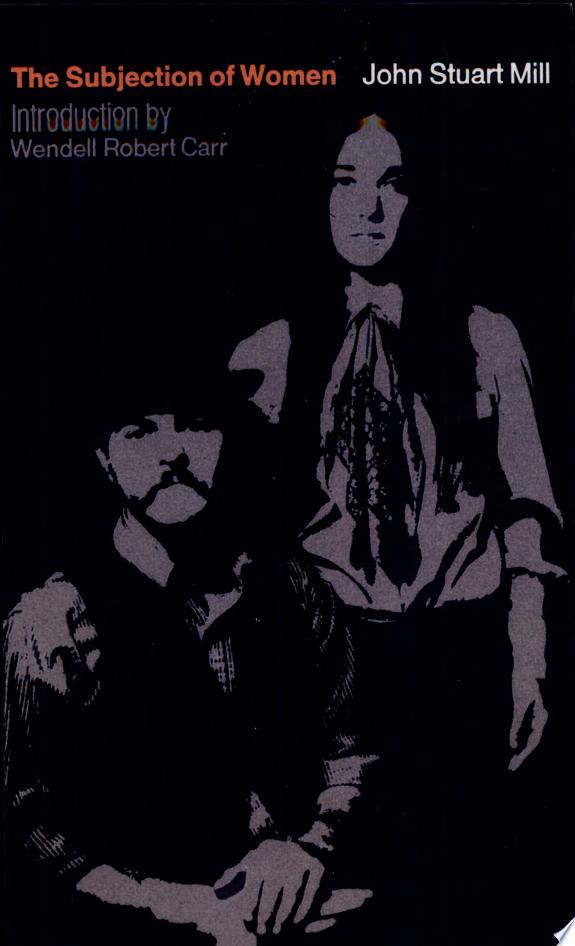
The Subjection of Women
Embed this book card on your site
Publisher description
In seeking to explain his opinions on a timeless subject--the relations between the sexes--John Stuart Mill admits that he has undertaken an arduous task. For "there are so many causes tending to make the feelings connected with this subject the most intense and most deeply-rooted of all those which gather round and protect old institutions and customs, that we need not wonder to find them as yet less undermined and loosened than any of the rest by the progress of the great modern spiritual and social transition." Yet typically in this essay Mill assails a system of inequality which he feels supports and encourages the subjection of one individual by another and raises questions about the nature and relationship of power and liberty. He proposes to tap the existing climate of opinion that would admit to the great injustice of excluding half the human race from decent occupations and public function on the basis of sex. More than a classical theoretical statement of the case for women's suffrage, the book attacks the full range of social and cultural attitudes and customs that transform physical fact (often compared by Mill to slavery in its most extended form) to social sanction and legal decree. The book treats inequities of the marriage contract and property rights as well as the psychological effects (the "positive evil") that personal servitude and exclusion from public affairs have on women. Are marriage and motherhood socially useful and humane goals? Mill contends that these roles are not "natural" and not always desirable, asserting that their narrow definition prevents women from exercising a truly civilizing influence on family and society. Publication of The Subjection of Women in 1869 drew attention to the fact that despite the implacable opposition of Queen Victoria, a great many women refused to accept the conditions imposed upon them and had recorded their protests. (Had not Queen Victoria inherited the throne, Mill reasons, she would not have been en
Description provided by Google Books