The Sidereal Messenger Of Galileo Galilei
Embed this book card on your site
Publisher description
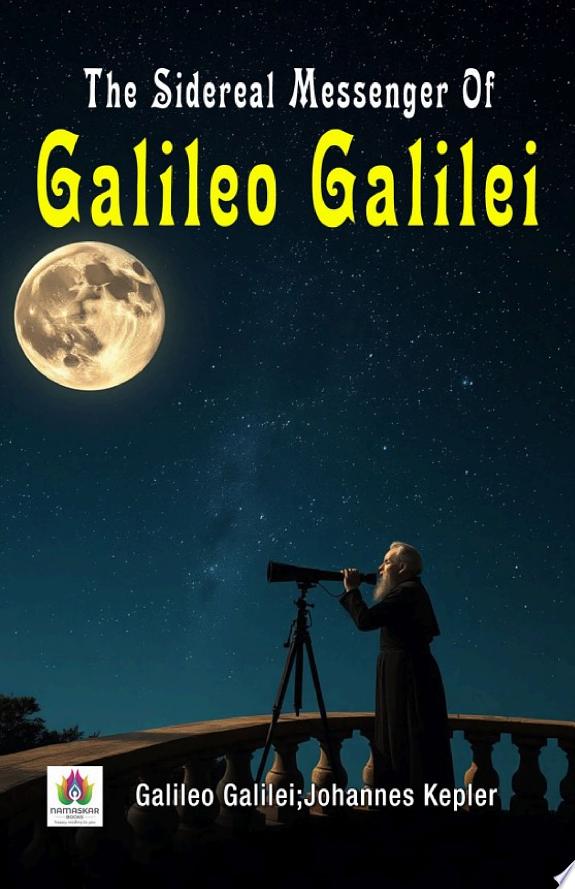
The Sidereal Messenger, authored by the pioneering astronomer Galileo Galilei, is a groundbreaking treatise that presents the revolutionary findings of Galileo’s telescopic observations of celestial bodies. Published in 1610, this seminal work marks a pivotal moment in the history of science, as Galileo challenges the established geocentric worldview that dominated astronomical thought for centuries. In *The Sidereal Messenger*, Galileo offers detailed descriptions and illustrations of his observations, including the discovery of the four largest moons of Jupiter, now known as the Galilean moons: Io, Europa, Ganymede, and Callisto. These observations provide compelling evidence supporting the heliocentric model proposed by Copernicus, which posits that the Earth and other planets revolve around the Sun. Galileo's meticulous approach emphasizes the importance of observation and experimental evidence in understanding the cosmos, laying the foundation for the modern scientific method. Galileo's work did not go unnoticed, and it caught the attention of other astronomers of the time, including Johannes Kepler, who would further develop and refine the Copernican model of planetary motion. The text also reflects Galileo's passion for science and his unwavering commitment to truth, despite the considerable opposition he faced from the Church and the prevailing scientific community. His articulation of celestial phenomena with clarity and enthusiasm captures the wonder of the universe while inviting readers to challenge their understanding of the heavens. The treatise is characterized by its engaging prose, blending scientific inquiry with a poetic appreciation for the beauty of the cosmos. Galileo's use of the vernacular makes the discoveries accessible to a wider audience, encouraging public interest in astronomy and scientific thought. This accessibility signifies a shift in the dissemination of scientific knowledge, moving away from the exclusive domain of the educated e
Description provided by Google Books